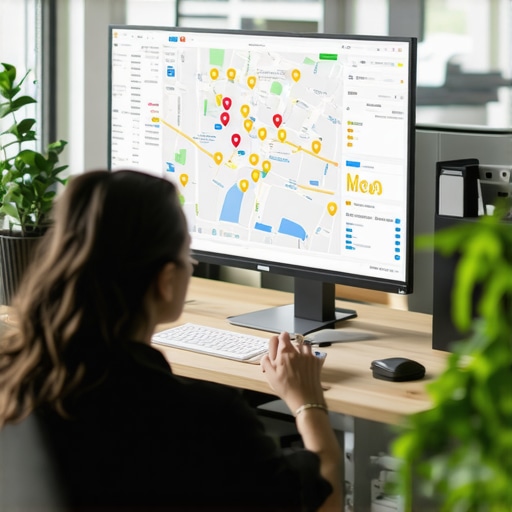
I remember the exact moment I realized my local business was invisible on Google Maps. It was a busy Saturday, and a customer told me they had trouble finding my shop even though I was right there in the heart of Bakersfield. Talk about a lightbulb moment. I knew then that without proper Google Maps optimization, my business was just another pin in the digital landscape—hardly visible, and definitely not thriving.
Why Your Business Needs to Dominate Google Maps Now
With over 80% of consumers using Google Maps to find local businesses, ignoring this platform is like leaving money on the table. The landscape has shifted dramatically in 2024, and local SEO isn’t just a bonus; it’s a necessity. But here’s the catch—ranking well on Google Maps isn’t about luck. It’s about strategy, consistency, and understanding what Google actually values in local search.
Early in my journey, I made the mistake of thinking that listing my business was enough. I figured, “Hey, I’m on Google; that should be enough.” Wrong. I overlooked crucial elements like accurate NAP (Name, Address, Phone), local reviews, and optimized categories. Within weeks, my competitors who paid attention to these details started appearing above me in local searches. That’s when I dove deep into the best local Bakersfield SEO tips for Google Maps rankings and saw real results. If you’re facing the same uphill battle, don’t worry—I’ll guide you through the essentials.
Is Google Maps Optimization Overhyped?
Many skeptics ask if investing time and money into Google Maps is worth it. My answer? Absolutely. But only if you follow proven strategies. I’ve seen businesses transform their local visibility by avoiding common mistakes—like neglecting to verify their listing or ignoring review management. Trust me, I learned this lesson the hard way and want to save you from my early blunders. For a comprehensive approach, check out some of the top tips that helped me, like local keyword optimization and consistent citation updates, by visiting this resource.
So, if you’ve ever wondered why your competitors always seem to pop up first, or if you’re frustrated with your current Google Maps ranking, you’re in the right place. In the upcoming sections, I’ll walk you through simple, actionable steps to boost your local visibility and turn that tiny pin into a powerful marketing asset. Ready to get started? Let’s dive deeper into what it takes to dominate Google Maps in California in 2024.
,
Claim and Verify Your Google Business Profile
First things first, ensure your business is properly listed on Google My Business. When I started, I made the mistake of skipping verification, which kept my listing unranked. I claimed my profile and completed the verification process promptly, which gave me a strong foundation. Make sure your name, address, and phone number (NAP) match exactly across all platforms to avoid confusion for Google and customers alike. For detailed instructions, visit this resource.
Optimize Your Business Details
Next, fill out every relevant detail—categories, hours, services, and attributes. Use specific categories that match your business niche; avoid broad or vague options. For instance, instead of just “restaurant,” specify “vegan restaurant” if applicable. I once changed my primary category to a more targeted one, and within weeks, my visibility increased. Accurate, keyword-rich descriptions help Google understand what you do and serve your local audience better. Check out these tips for more insights.
Gather and Manage Reviews
Reviews are like votes of confidence from your customers and are critical for rankings. I actively asked satisfied clients to leave reviews, making it a routine. Respond promptly to reviews—both positive and negative—to show engagement. I learned that personalized responses can turn a one-star review into an opportunity. Google favors fresh, genuine reviews, so set up a process to encourage reviews regularly. For strategies on review management, visit this guide.
Build Local Citations and Consistent NAP
Consistent citations across local directories boost your credibility. I used citation management tools to ensure my business info was uniform everywhere—Yelp, Bing Places, industry-specific directories, and more. Inconsistent NAP info confuses Google and hurts rankings. Focus on high-authority sites first; I prioritized local directories for Bakersfield and California-based platforms. Regularly update your citations and keep track of changes. Check out this resource for detailed citation strategies.
Leverage Local Keywords and Content
Embedding local keywords into your website and Google Business Profile is essential. I included keywords like “Bakersfield plumbing services” naturally into my descriptions and posts. Use tools like Google Keyword Planner to find high-volume local search terms. Creating localized content, such as blog posts about Bakersfield community events, also helped boost my visibility. For tips on effective keyword integration, see these strategies.
Monitor and Adjust Your Strategy
Finally, track your rankings and analytics regularly. Use Google Insights and other local SEO tools to see what’s working. I set weekly check-ins to review my progress and adjust my tactics—adding new photos, updating info, or soliciting reviews. Consistency is key; Google rewards active, maintained profiles. For ongoing optimization tips, visit this comprehensive guide.
Many business owners believe that simply creating a Google My Business profile guarantees top rankings in local searches. However, this is a misconception that can hinder your efforts. In reality, most people overlook the nuanced strategies that differentiate a well-optimized listing from an average one. For example, while many think that keyword stuffing in your description will boost your visibility, Google’s algorithms have become sophisticated enough to penalize such tactics. Instead, focusing on natural language and relevant keywords, as outlined in these strategies, yields better results.
Another common myth is that reviews are a minor factor. In fact, reviews are one of the most impactful elements for local SEO. But here’s the trap: businesses often ask for reviews in bulk without paying attention to review quality or response management. This can backfire if reviews appear suspicious, or if negative reviews are ignored. Engaging authentically with reviews demonstrates credibility and signals to Google that your profile is active, which can positively influence rankings. To avoid this common mistake, check out these review management tips.
Many assume that citations are all about quantity. They think listing on as many directories as possible will automatically improve visibility. Not true. The key is citation consistency and relevance. Mismatched NAP details across platforms can confuse Google and hurt your rankings. I learned this the hard way, and now I prioritize high-authority local directories, ensuring every citation matches perfectly. For deeper insights, visit this resource.
Why Do Many Overlook the Power of Local Content
Many think that local SEO is only about technical tweaks and citations. But creating localized content, like blog posts about community events or local news, can significantly boost your relevance in Google’s eyes. It’s a nuanced tactic that often gets overlooked, yet it’s proven to increase engagement and visibility. Google favors active, community-focused content because it signals your genuine local presence. For more on integrating local content effectively, see these tips.
Have you ever fallen into this trap of oversimplifying Google Maps optimization? Let me know in the comments. Remember, understanding these nuanced aspects can be the difference between being a pin in the map and dominating your local market.
How do I maintain Google Maps rankings over time?
Keeping your Google Maps presence strong requires a combination of consistent effort and the right tools. I personally rely on advanced citation management platforms like BrightLocal to track and update my business listings across hundreds of directories, ensuring NAP consistency. Regularly monitoring your reviews with tools such as ReviewTrackers helps catch negative feedback early and respond promptly, which Google values highly.
Another essential aspect is ongoing content updates. I schedule bi-weekly blog posts or community news snippets, integrating local keywords naturally. This keeps your profile active and signals to Google that your business remains engaged with the local community.
For technical health, I use Google Search Console to identify and fix any crawl errors or duplicate listings that might hurt your visibility. This proactive approach prevents issues before they impact rankings. Additionally, setting up a Google Alerts feed for your business name and related keywords helps me stay aware of online mentions and reviews that could influence your reputation.
What tools do I recommend for maintaining Google Maps success?
Beyond citation tools, I swear by Moz Local for managing local citations and ensuring consistency. It seamlessly syncs your NAP across multiple platforms, which is crucial for long-term stability. To analyze your local keyword performance, I use BrightLocal’s rank tracker, which provides detailed insights into how your profile performs over time and suggests actionable improvements.
Finally, investing in a good review management system like Podium has transformed how I handle customer feedback. It automates review requests and helps generate fresh, positive reviews while managing negative ones tactfully. As local SEO evolves, I predict that automation and AI-driven insights will become even more critical in maintaining top Google Maps rankings efficiently.
Regularly updating your profile, leveraging these tools, and staying engaged with your community are the cornerstones of sustained Google Maps success. Don’t forget to set monthly review goals and periodically audit your citations to keep your business visible and competitive. Ready to take your local SEO to the next level? Start by integrating one of these tools today and watch your rankings stabilize and grow!
After years of navigating the complex landscape of local SEO, I’ve uncovered some less obvious lessons that can make or break your Google Maps ranking in 2024. These insights are the result of personal trial, error, and breakthrough moments that I wish I’d known from the start.
The Hardest Lesson I Learned About Google Maps Optimization
One of the biggest realizations was that consistency isn’t just about NAP details—it’s about maintaining active engagement. I used to think that once I set up my profile and optimized it, I could rest. But Google rewards ongoing activity—like regular updates, responding to reviews, and posting fresh content. Neglecting this can cause your rankings to slip faster than you expect.
3 Myths About Local SEO That Held Me Back
- Quantity over quality of citations: I believed listing everywhere helped, but I learned that relevance and consistency matter more. Mismatched info confuses Google and hurts rankings.
- Reviews are optional: I ignored review management early on, only to see competitors surge ahead. Responding authentically to reviews signals activity and credibility.
- Keyword stuffing works: I thought more keywords meant better visibility. Instead, Google penalized my over-optimization—natural language and relevant keywords are the way to go.
What Industry Experts Won’t Tell You About Local Rankings
Many overlook the power of localized content. Creating blog posts, community news, or even event updates about Bakersfield helped me build a genuine local presence. Google favors businesses that actively engage with their community—this signals trustworthiness and relevance. Implementing local content strategies can give you an edge over competitors stuck in generic optimization routines.
Curated Resources to Elevate Your Google Maps Game
- Top SEO Agency Tips for Better Maps Rankings — my go-to for advanced strategies that really work in California’s local markets.
- Bakersfield SEO Tips for 2024 — specific tactics tailored to local businesses wanting to dominate Google Maps.
- Effective Local SEO Strategies — comprehensive guides I’ve relied on to stay ahead and keep my profile optimized.
- Affordable Local SEO Strategies — budget-friendly tactics that deliver big results in Bakersfield.
Your Turn to Make the Move
Harnessing the true potential of Google Maps isn’t just about technical tweaks—it’s about building a vibrant, active, and community-focused profile. When you prioritize consistent engagement, authentic reviews, and localized content, you create a magnetic presence that attracts local customers effortlessly. Are you ready to take your local business to the next level and become the go-to in your area? Start implementing these strategies today and watch your visibility soar!
What’s your biggest challenge with optimizing your Google Maps listing? Share your experience below—I’d love to hear your story.
,
Leave a Reply