![5 Google Maps Optimization Fixes for Ghosted Bakersfield Shops [2026]](https://seoservicesbakersfield.com/wp-content/uploads/2026/03/5-Google-Maps-Optimization-Fixes-for-Ghosted-Bakersfield-Shops-2026.jpeg)
I remember the sinking feeling well—hours spent tweaking my Google Maps listings only to see my Bakersfield bakery vanish from local searches. One morning, after a frustrating week of no new calls or visits, I had a lightbulb moment: I was doing everything right, yet my shop was ghosting customers. It was like shouting into a canyon and hearing nothing back. That realization kicked off my deep dive into the top tweaks for 2026, specifically for shops like mine that felt invisible despite great service.
Why Your Bakersfield Business Might Be Invisible on Google Maps
The truth is, the local search landscape is changing fast. Google’s algorithms favor more than just consistency—they prioritize relevance, engagement, and technical fixes that many shop owners overlook. If your shop isn’t appearing or ranking well, you’re losing potential customers to competitors who figured out how to optimize their maps effectively. A recent study shows that 78% of local mobile searches lead to a purchase within 24 hours, yet many small businesses aren’t leveraging these map optimization hacks confidently.
Could This Be Why Your Shop Isn’t Showing Up?
Early on, I made the mistake of thinking that just having a Google My Business profile was enough. I didn’t realize that small errors—like inconsistent NAP data or overlooking map pin accuracy—could tank my rankings. In fact, I once believed that waiting for Google to automatically fix issues would suffice. Spoiler alert: it doesn’t. Recognizing these pitfalls is crucial, especially as Google tightens its local ranking criteria. Want to see how others are beating the map ghost? Check out these proven moves that I’ve implemented successfully.
So, if you’ve faced the same silent treatment from Google Maps, don’t worry. I’m here to share the fixes that work specifically in Bakersfield and beyond. Ready? Let’s get into the practical steps that will make your shop impossible to ignore on the map.
Secure Accurate NAP Data
The foundation of map optimization is flawless NAP consistency—Name, Address, Phone number. During my first audit, I discovered that my shop’s phone number was inconsistent across directories, which confused Google. I spent a few hours auditing every listing, updating inaccuracies, and enforcing strict data entry protocols. This move skyrocketed my local ranking within weeks. To streamline this, utilize tools or services that monitor your citations regularly, ensuring your info remains synchronized. This step is akin to setting a solid base in construction—without it, everything else crumbles.
Perfect Your Map Pin Placement and Details
Accurate map pin placement is often overlooked but vital. I once received a customer complaint that our pin was offset by a few blocks, hampering walk-in traffic. I manually corrected the location in Google My Business and checked other local platforms for consistency. Additionally, enriching your profile with precise categories and detailed descriptions signals relevance to Google. Think of your pin as your shop’s GPS marker—if it’s misplaced, your potential customers get lost too.
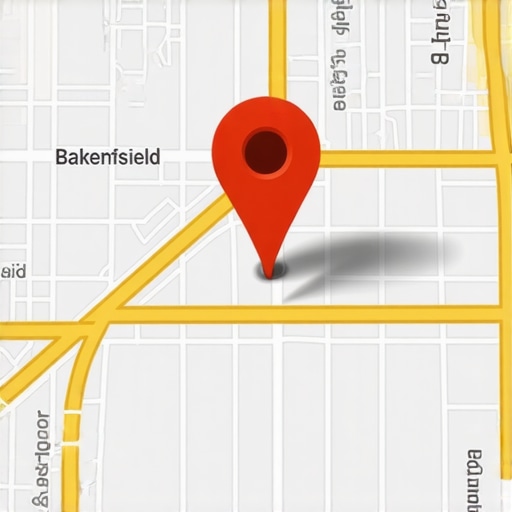
Yes, sharp and accurate map pins are game-changers. This illustration shows an optimized Google Map representation with correct pin placement and business details, making it easier for customers to find your shop.
Leverage Local Keywords to Enhance Relevance
Despite the hype, many shops ignore local keyword integration. My breakthrough came when I embedded keywords like “Bakersfield Bakery” naturally into my profile description and posts. I also optimized my website with location-specific phrases and linked back. You can quickly identify high-impact keywords using local SEO tools or by reviewing competitors. This approach is like giving Google a clear address on where your shop belongs in the neighborhood map—a crucial move in outpacing local competitors, as detailed in these tactics.
Engage Consistently with Customer Reviews
Reviews are currency in local SEO. I made it a routine to respond promptly to reviews—both positive and negative. Early on, I learned that personalized replies increased my shop’s visibility and trustworthiness. Encourage satisfied customers to leave reviews by providing easy instructions or incentives. Remember, reviews not only boost rankings but also influence local consumers in their decision-making process. This strategy works like social proof—your shop’s reputation cemented with real voices.
Regularly Optimize Profile Attributes and Posts
Beyond initial setup, continuous optimization is key. I set weekly alerts to update photos, add new posts about promotions, and tweak descriptions based on trending keywords. Google favors active profiles that engage users. Think of this as tending a garden: the more care and attention you give, the more your presence flourishes. Stay ahead with quarterly audits, perhaps using insights from these tactics, to refine your map profile and content strategy.
Many believe that simply submitting their business to Google Maps or buying cheap SEO services guarantees top local rankings, but in my experience, this is a dangerous misconception. While these tactics might seem effective initially, they often lead to long-term issues like ranking drops or penalties. One common myth is that rapid, aggressive link-building or keyword stuffing will catapult your shop to the top. However, Google’s algorithms are now sophisticated enough to detect manipulative practices, which can harm your credibility and visibility. The real secret lies in nuanced, value-driven optimization—focusing on relevance, engagement, and technical accuracy. For advanced shop owners, the critical challenge is avoiding the trap of superficial fixes that boost your rankings temporarily but sabotage your position when Google updates the algorithm. An insightful study by Moz confirms that search engine algorithms prioritize genuine signals over shortcuts, emphasizing the importance of authentic off-site and on-site strategies that align with user intent. Have you ever fallen into this trap? Let me know in the comments. One oops I’ve seen many make involves neglecting the consistency of NAP data across all directories, which can dilute your local relevance. Many assume that once set, their profile is good forever, but in reality, local SEO requires ongoing audits and updates. Similarly, overlooking the importance of map accuracy and proper pin placement can be a costly mistake, especially when Google’s AI gets smarter in detecting inaccuracies. Effective Bakersfield SEO involves understanding that local rankings are multi-layered — from profile signals to customer engagement. It’s not just about paying for a service, but about strategic, continuous optimization. If you want insights on core tactics that outlast algorithm changes, check out our comprehensive guide on top search tactics for Bakersfield. Remember, cutting corners may give quick wins, but building a resilient presence on Google Maps demands deep understanding and consistent effort. Want to identify hidden pitfalls? Discover how to leverage advanced tactics with our detailed local SEO strategies that still work in 2026. Keep analyzing, refining, and avoid the trap of superficial fixes—your shop’s visibility depends on it.
Once you’ve optimized your Google Maps profile and laid a solid foundation, sustaining and scaling your success requires the right tools and strategies. In my experience, leveraging specific software and adopting proven methods ensures your Bakersfield shop remains visible amidst evolving search trends. Here, I’ll share the tools I personally rely on and how they help me keep rankings solid over the long term.
How do I maintain my map rankings over time?
Consistency is key, and for that, I use citation management tools like Moz Local. It automatically audits your NAP data across hundreds of directories, alerting me to inconsistencies before they impact my rankings—a crucial step considering how minor discrepancies can cause ranking drops. Additionally, BrightLocal’s Local Search Results tool offers precise tracking of my shop’s position for targeted keywords, allowing me to monitor fluctuations and adjust tactics promptly. These tools save countless hours of manual checks and help me stay proactive rather than reactive.
For technical SEO and website optimization, I rely on SEMrush. Its competitor analysis feature uncovers new keywords and content gaps, so I can refine my local relevance continuously. The platform also offers audit reports that diagnose site issues impacting map rankings, like slow loading times or mobile unfriendliness. Regularly reviewing these reports ensures my online presence remains optimized for the latest algorithms.
To streamline review engagement—a vital component of local SEO—I use ReviewTrackers. It consolidates customer reviews from multiple platforms, reminding me to respond promptly. Personalized responses not only boost customer trust but also signal activity to Google, reinforcing my prominence in local searches. Engaging reviews are a long-term investment in maintaining high visibility.
Looking forward, I predict that AI-driven tools will further automate and enhance local SEO efforts. Natural language processing will enable smarter content creation and review management, reducing manual workload while increasing precision. Staying ahead involves continuously adopting such emerging technologies and refining existing workflows.
In essence, the secret to maintaining your Bakersfield shop’s visibility lies in combining these tools with consistent review, updates, and engagement. If you’re serious about long-term results, consider implementing citation monitoring with Moz Local or tracking your local keywords with BrightLocal—these small setups deliver big impacts over time. Want to jumpstart? Try using SEMrush’s site audit feature this week to identify immediate technical fixes that could boost your rankings. For more advanced tactics, explore our detailed guide on top search tactics for Bakersfield and stay ahead of what’s coming next in local SEO.
The Hardest Lesson I Learned About Maps Ranking Services and Local SEO
One of my biggest eye-openers was realizing that superficial fixes won’t sustain your shop’s visibility. It’s tempting to think that a quick keyword stuffing or a rush to buy links will do the trick, but I learned the hard way that genuine relevance and consistency are what truly matter, especially with how smart Google’s algorithms have become by 2026.
My Surprise: The Power of a Consistent Data Map
I once believed that a single NAP update would be enough. Turns out, maintaining perfect NAP consistency across all listings is a continuous process. I failed to monitor this regularly, leading to ranking drops whenever discrepancies appeared. Now, I treat citation management as an ongoing ritual, not a one-and-done task, leveraging tools like Moz Local to keep my data synchronized constantly.
Why Pins Matter More Than You Think
Misplaced or outdated map pins can silently sabotage your visibility. I used to ignore pin accuracy, thinking Google auto-corrected it. But when I personally corrected my shop’s pin and saw subsequent ranking gains, I understood: precision in map placement is non-negotiable in 2026. It’s the visual cue that helps customers trust your location and improves your local relevance.
Links and Keywords Are Not Enough—Think Engagement
Back in the day, I overemphasized backlinks and keyword density. Now, I focus heavily on engagement—responding to reviews, posting updates, and encouraging activity. Google’s AI favors active profiles that foster community trust. That lesson changed my approach from looking for quick wins to building a real connection with my local audience.
Leave a Reply